
As global temperatures and sea levels rise, some of the world’s major cities could experience unbearable living conditions. While climate scientists don’t anticipate any location will become fully uninhabitable, they worry that some areas will struggle to support human life.

Cities more severe and potentially fatal weather conditions. With this in mind, scientists have begun to pinpoint locations that could become unbearable for humans by 2100.
Heatwaves are increasing in frequency, duration, and intensity worldwide in response to climate change.
These 10 cities might soon struggle to support human life. And for the most part, these areas are already witnessing the devastating effects of climate change.
Miami, Florida
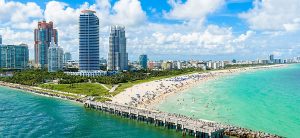
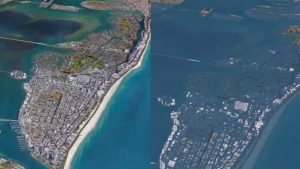
According to a study published in 2016, the risk of sea-level rise in the continental US is very high, and more than 3.3 million Miami could face catastrophic flooding by 2100.
It was researched that between 2010 and 2100, more than 13 million people could be exposed to 6 feet worth of sea-level rise. Of those residents, about a quarter are in Miami-Dade and Broward counties in Florida.
In the face of this catastrophic scenario, Miami might not be able to adequately prepare.
New Orleans, Louisiana
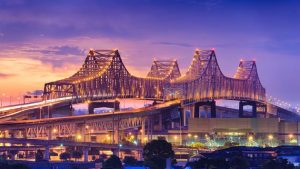
New Orleans could be underwater as well.
The study also cited New Orleans as one of the US cities most vulnerable to flooding. If sea levels were to rise by just 3 feet, more than 100,000 New Orleans residents, about a third of the city’s population could be inundated.
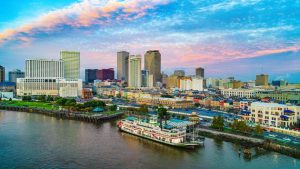
When you start tracking on storm surges, tidal flooding, all those other associated events, the affected populations get much larger.
Chicago, Illinois
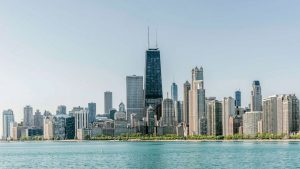
Chicago could see another fatal heatwave at any moment.
Chicago is in one of America’s most severe heat zones, according to a climate scientist at the University of Michigan.
In 1995, the city witnessed a dangerous heat wave that killed more than 700 people. Outside temperatures reached 106 degrees Fahrenheit, while wet-bulb temperatures which account for both heat and humidity reached 85 degrees, at that time.
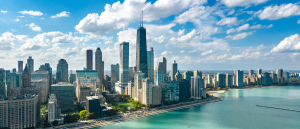
A heatwave of this magnitude could happen again at any time in Chicago, which sees high humidity in the summer and regular continental heat.
Dubai, UAE
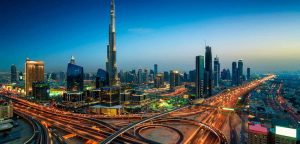
Summer temperatures in Dubai, United Arab Emirates, could reach 113 degrees Fahrenheit after 2070.
A 2015 study from scientists have identified the Persian Gulf as a “regional hotspot” where climate change could severely threaten lives.
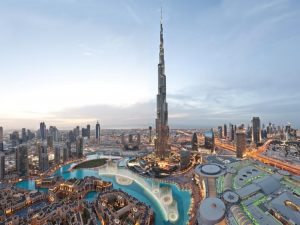
The study found that Gulf cities like Dubai would see temperatures as high as 113 degrees Fahrenheit in the summer after 2070 and that wet-bulb temperatures could exceed their fatal threshold i.e. 95 degrees.
Abu Dhabi, UAE
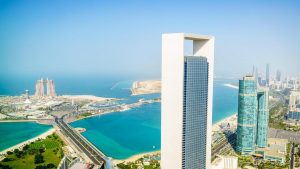
Daily temperatures in Abu Dhabi, UAE, could become unbearable after 2070.
Abu Dhabi is also listed as one of the cities most vulnerable to extreme heat.
In just half a century, the hottest temperatures recorded in Abu Dhabi will be more than one-off occurrences.
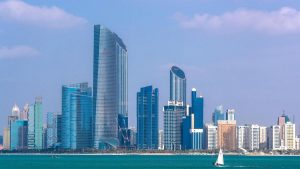
The highest temperature recorded in the region is 126 degrees Fahrenheit. By 2070, the city’s residents can expect to endure this level of heat more frequently.
Shanghai, China

Shanghai, China, could see fatally high temperatures from 2070 to 2100.
North China could see the deadliest heat waves on the planet by the end of the century.

Shanghai, the third-most-populous city, with about 25 million residents — could be one of the cities that’s most affected. Researchers found that there could be at least five instances of temperatures exceeding the fatal threshold i.e. 95 degrees Fahrenheit.
Beijing, China

Beijing’s smog could threaten its livability.
Beijing is also part of the North China, making it vulnerable to extreme heat waves.

Like many Chinese cities, Beijing is a major emitter of greenhouse gases, which also contribute to air pollution. The city is known for frequent bouts of smog that force locals to wear face masks.
New Delhi, India

More residents of New Delhi, India, could have nausea and headaches because of the smog, or heatstroke on hot days.
Extreme temperatures in Delhi are similar to those in Beijing and Shanghai.

A 2017 analysis found that wet-bulb temperatures in South Asian cities like Delhi could reach 95 degrees Fahrenheit, the fatal threshold by 2100.
Dhaka, Bangladesh
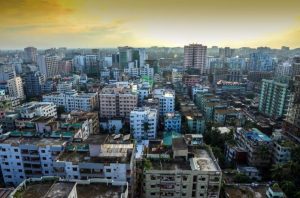
Dhaka, Bangladesh’s capital city, has nearly 19 million residents in its metropolitan area.
Bangladesh is one of the most vulnerable nations when it comes to climate change.The country is not only prone to heat waves, but already has to contend with devastating floods.
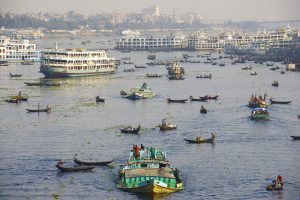
“Sea-level rise is already really present” in Bangladesh. As the storm surge gets bigger, there are going to be more problems because there are so many people. Many climate refugees in Bangladesh are fleeing to Dhaka from rural villages, yet that area is still vulnerable to floods, particularly during monsoon season.
Lagos, Nigeria
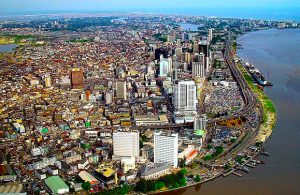
Lagos, Nigeria, is growing rapidly despite the looming threat of sea-level rise.
Lagos’ population may be growing, but the city is also becoming more vulnerable to sea-level rise.
Lagos is particularly susceptible to floods because of its low-lying terrain and location on a river delta.
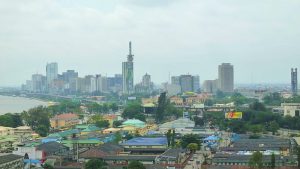
The increased frequency of flooding and extreme weather in cities like Lagos could make it difficult for the areas to recover after each event.
There are 47 megacities currently existing on the planet today, every single one of them will be affected by climate collapse. By 2100 the population is expected to peak around 11 billion, by then 100+ megacities will exist with most being in developing nations within the likes of Africa and Asia.
Governments will just change the terms of livability so that humans settle for less than the luxuries we have now, whole families crammed into slums and crumbling infrastructure will be our demise long before climate collapse kicks in, those problems we already suffer from in many cities will only be exacerbated by a climate collapse.